 Previous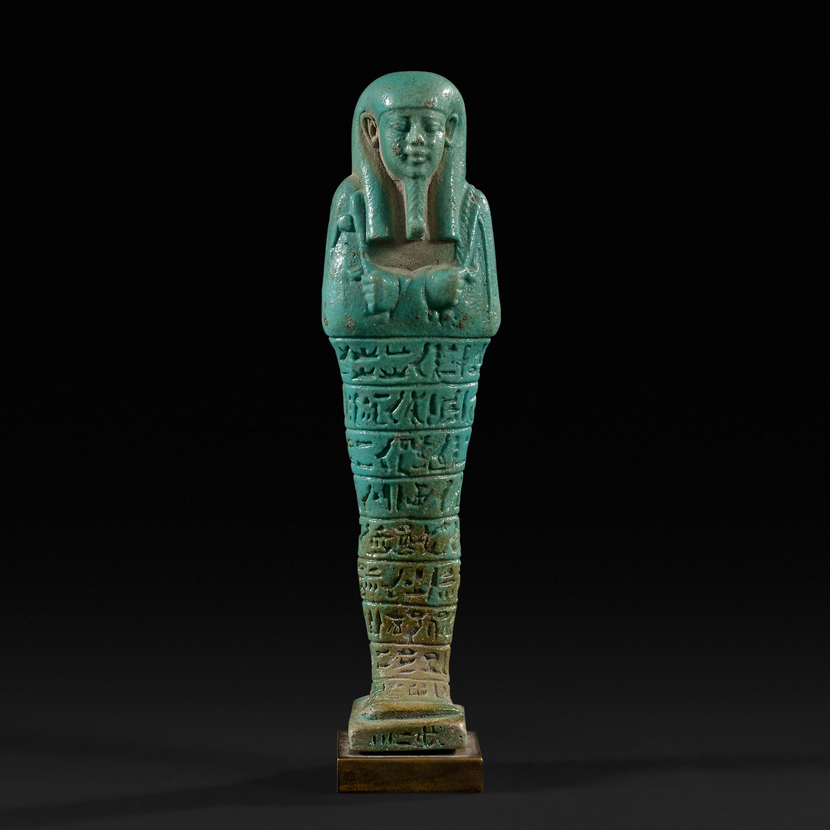
Ushabti for Tjaiennahebu
Overseer of the royal fleet, born of Tanefertity
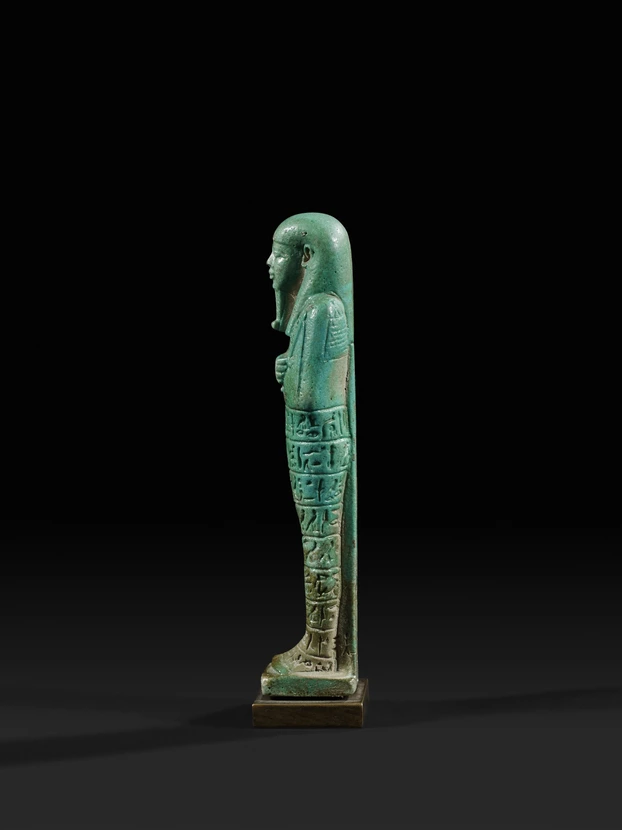
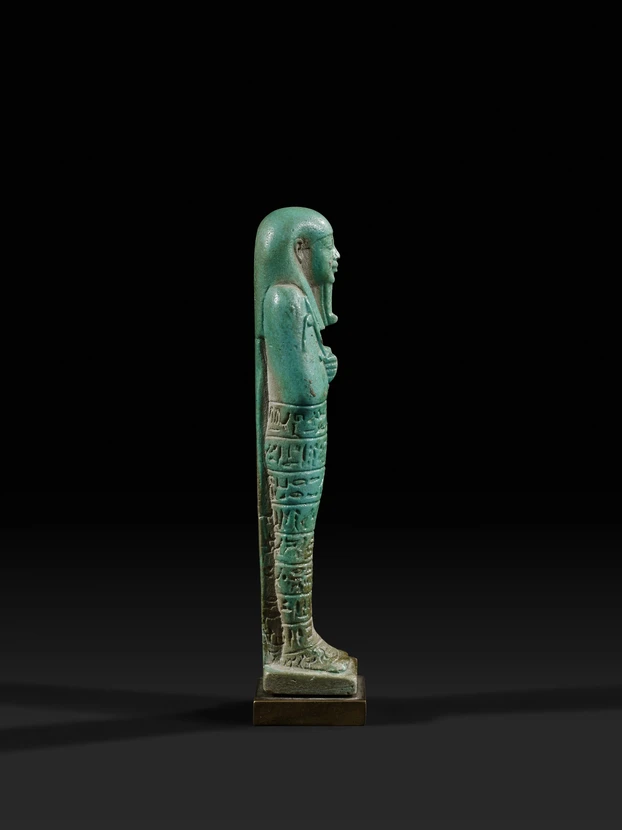
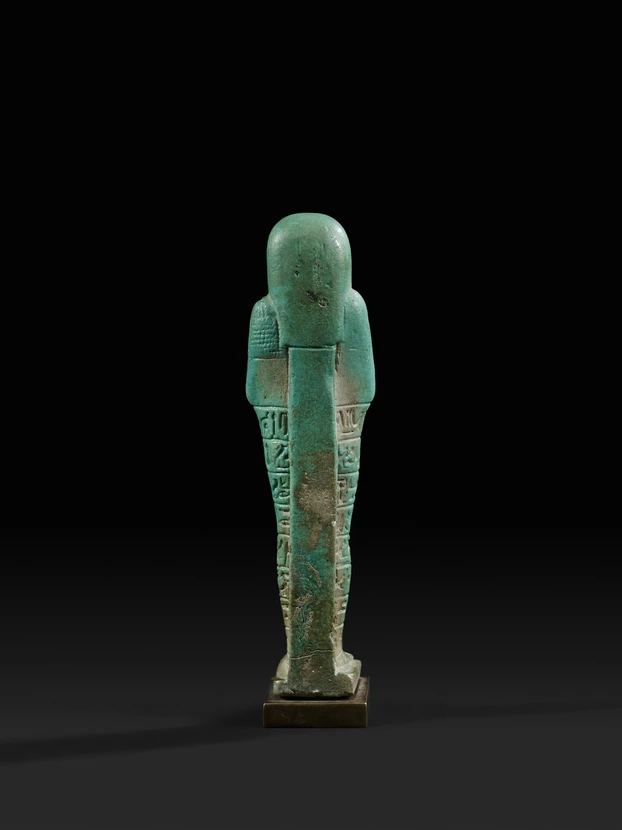
The mummiform figure is standing on an integral trapezoidal base against an uninscribed back pillar. On the lower half of his body, nine rows of crisply incised hieroglyphs recite Chapter VI of the Book of the Dead, state the name of Tjaenhebu, and give his filiation as son of Tanefertity. Part of the inscription was continued on front of the base.
Egypt, Saqqara
Late Dynastic Period, XXVI Dynasty , Reign of Amasis circa 570-525 BC
Blue-green Faience with incised hieroglyphs
Height 18.2 cm ( 7 1⁄8 in )
Former German private collection Berlin acquired in the 1970’s from a renowned Swiss private collection, by descent from the above
A. Eberwein & P. Renaud: Shabtis for the Overseer of the Royal Ships, Tjaiennahebu son of Tanefertiyti, edition 2026
 Share
Share  Call Us
  Enquire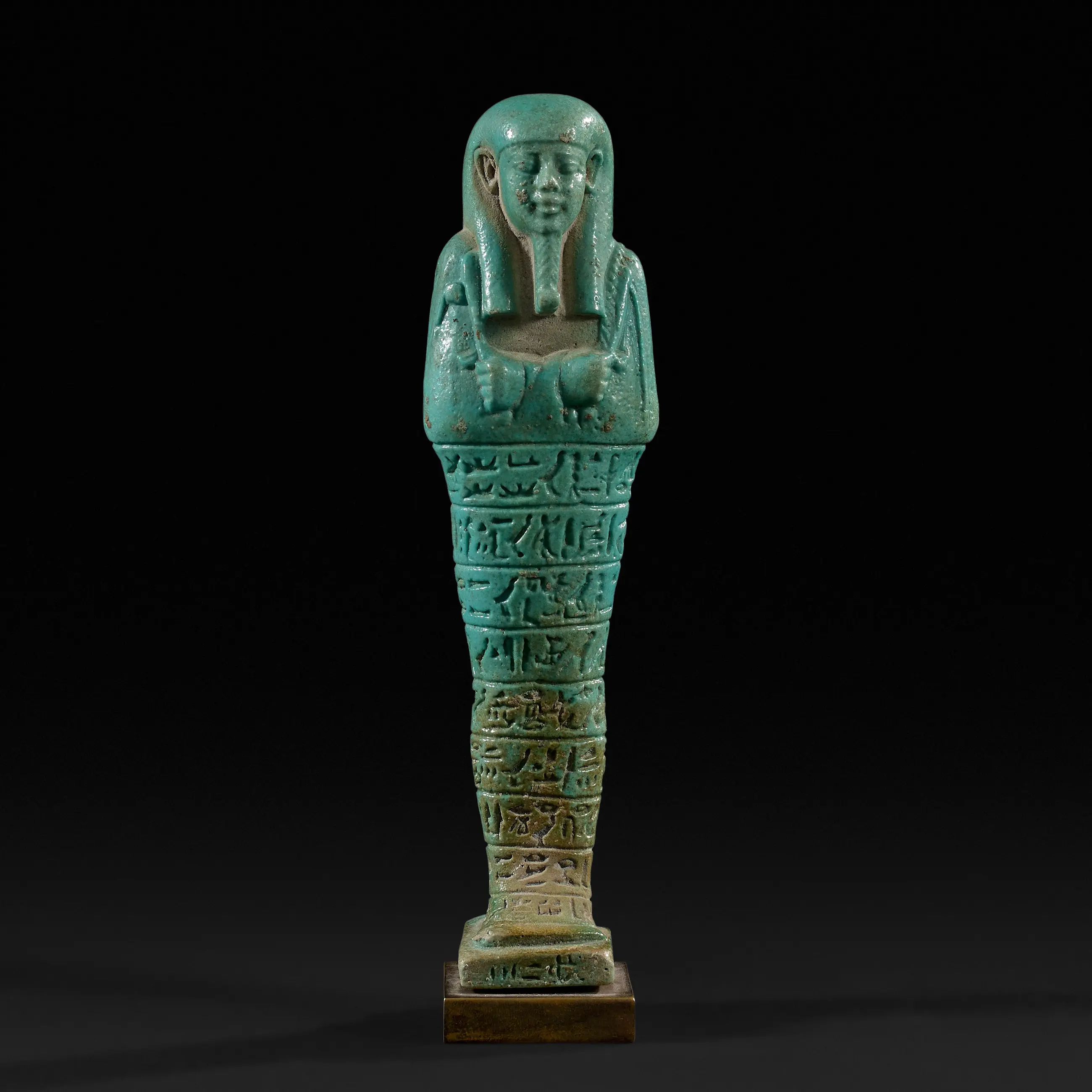
The mummiform figure is standing on an integral trapezoidal base against an uninscribed back pillar. On the lower half of his body, nine rows of crisply incised hieroglyphs recite Chapter VI of the Book of the Dead, state the name of Tjaenhebu, and give his filiation as son of Tanefertity. Part of the inscription was continued on front of the base.
The delicately modelled face has smooth rounded contours and refined details, with eyebrows, upper and lower eyelids and extended eyelines all in raised relief. Tjaenhebu wears a smooth tripartite wig and a braided false beard curving out at its tip, typical for the figures since the XXVI Dynasty. At his chest his hands protrude from the wrappings and hold a crook, flail and the twisted cord of a seed bag suspended behind the left shoulder. These agricultural implements reference the ushebti’s function to perform labour on behalf of the deceased in the afterlife.
This type of ushabti was made by pressing a quartz-based ceramic paste into a mould. Several moulds could be used for one person. The precise hieroglyphs and fine facial features were achieved when the statuette was completed by hand, resulting in different finishing from one statuette to the other.
His tomb was found by Barsanti in 1900 near the Unas pyramid in Saqqara. 401 Ushebti were inventoried, many of which are exhibited in the world’s largest museums.


