 Previous
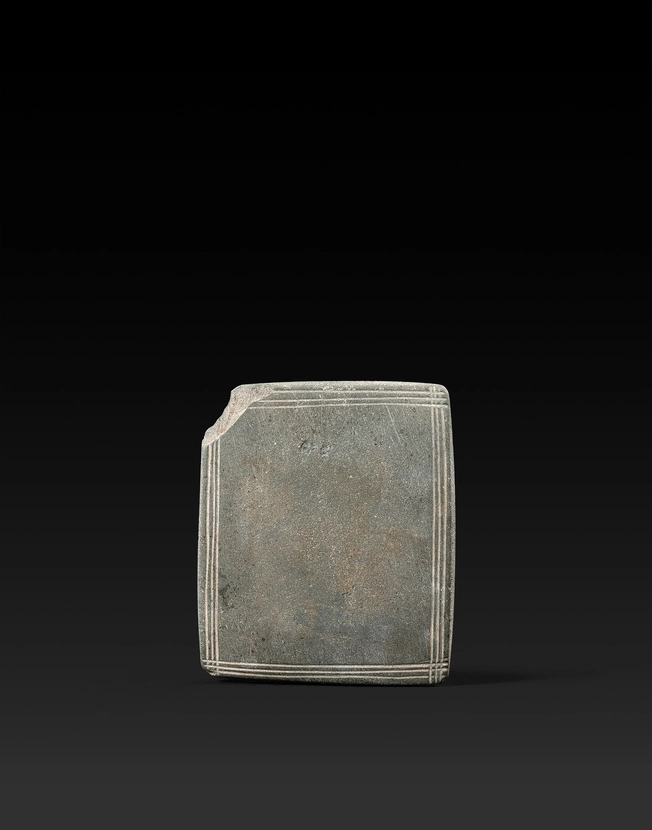
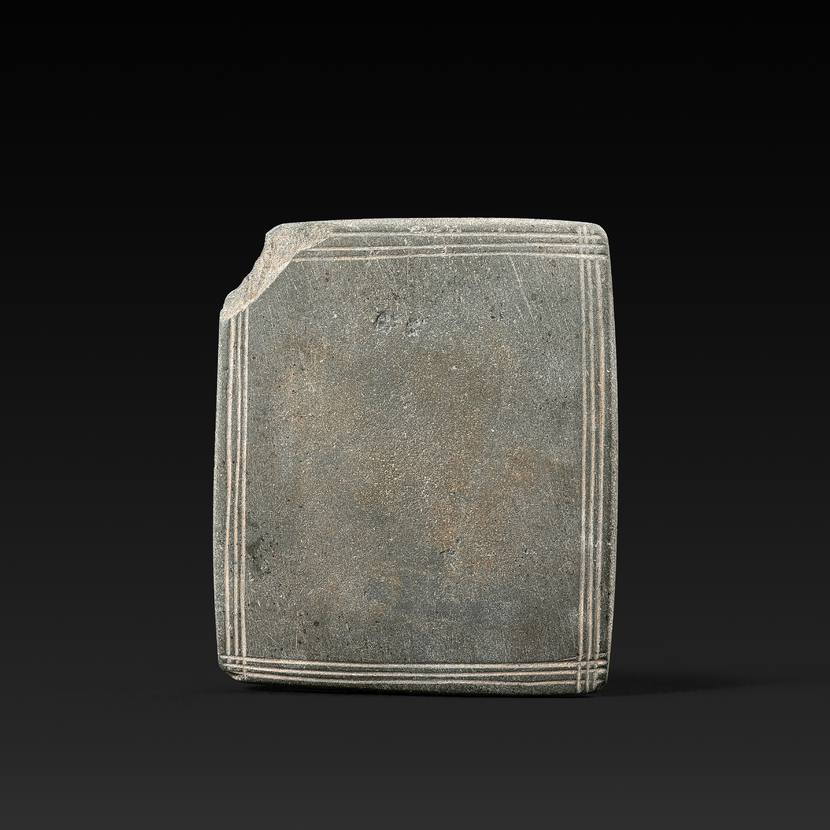
Rectangular cosmetic palette
The cosmetic palette is rectangular in shape, with a border formed by three incised lines running around its perimeter and intersecting at the corners.
Egypt
Nagada I , 4000-3500 BC
Grauwacke
Height 10 cm ( 3 7⁄8 in )
Width 8.3 cm ( 3 1⁄4 in )
Private collection Dr. J. Hansen Saint Lizier, France, acquired in 2007 from Galerie Archea, Amsterdam The Netherlands; thence by descent
W.M. Finders Petrie : Corpus of Prehistoric Posttery and Palettes, British School of Archeologie in Egypt, 1917 A. Wiese & M. Page-Gasser : Ägypten, Augenblicke der Ewigkeit, Philipp von Zabern, Mainz 1991
Petrie Museum, UC5418 Museum of Fine Arts, Boston 11.213
 Share
 Print
 Call Us
 Enquire
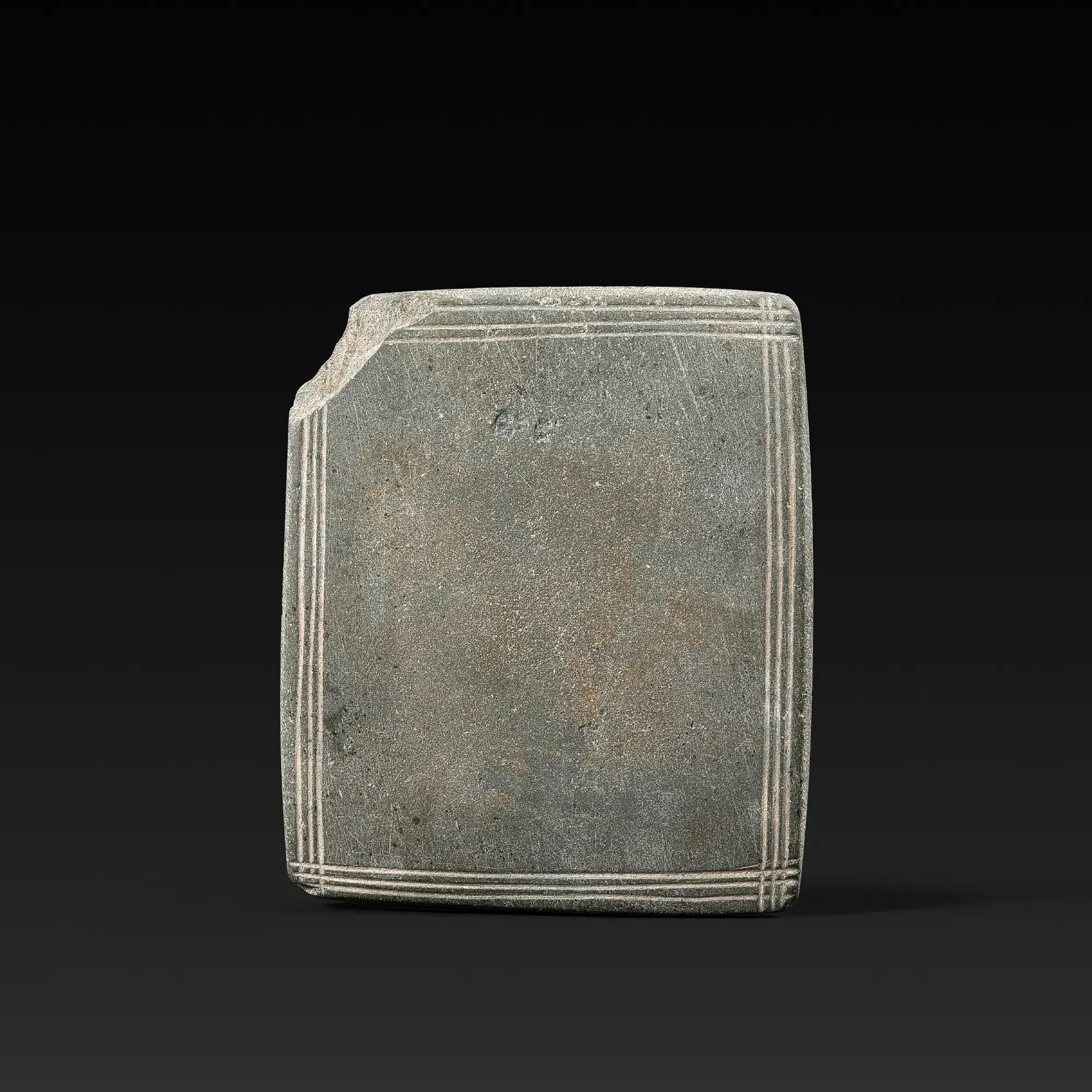
The cosmetic palette is rectangular in shape, with a border formed by three incised lines running around its perimeter and intersecting at the corners.
Slate palettes of various shapes were among the most common grave goods of the Predynastic Period. Although apparently intended primarily for grinding cosmetic pigments, these objects held significance beyond their practical function, serving ceremonial and possibly symbolic purposes. Eye cosmetics may also have offered some protection against intense sunlight and possessed disinfectant properties.
The earliest examples date to the Badarian period and are generally simple, undecorated palettes in rectangular or rhomboidal forms, although some feature incised motifs. During the early Naqada I period (c. 4000–3500 BC), palettes became more varied in shape, with increasingly elaborate geometric designs and stylised silhouettes of animals, including hippopotami and turtles. By the Naqada I period, cosmetic palettes are thought to have acquired ritual or magical significance alongside their practical function.


