Previous
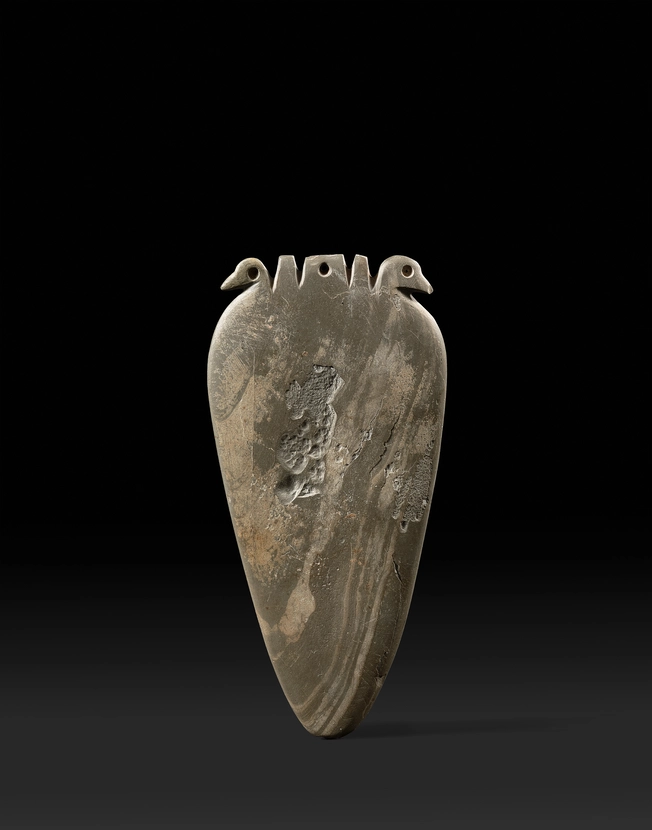
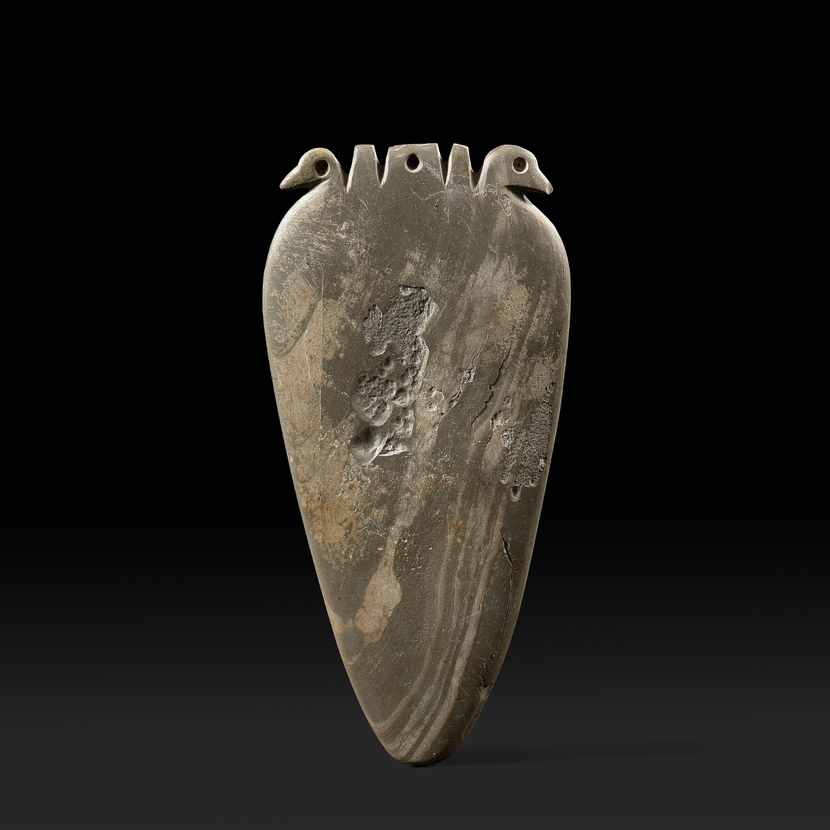
Cosmetic palette with two bird heads
The cosmetic palette is oval in shape, tapering to a point at the bottom and surmounted by a pair of outward-facing bird heads, possibly those of ducks. The eyes of both birds are marked with a drilled hole, which would originally have held inlays of bone or ostrich eggshell. The spiked decoration between the two heads may represent a nest. A small perforation between the heads would have allowed the palette to be suspended.
Egypt
Nagada II , 3500-3200 BC
Grauwacke
Height 19.4 cm ( 7 5⁄8 in )
Width 9.6 cm ( 3 3⁄4 in )
Private collection Dr. J. Hansen Saint Lizier, France, acquired 11th June 2006 from Galerie Thirion Bruxelles Belgium; thence by descent
A. Wiese & M. Page-Gasser : Ägypten, Augenblicke der Ewigkeit, Philipp von Zabern, Mainz 1991 W.M. Finders Petrie : Corpus of Prehistoric Posttery and Palettes, British School of Archeologie in Egypt, 1917
Petrie Museum, UC15829 Louvre E 11151
 Share
 Print
 Call Us
 Enquire
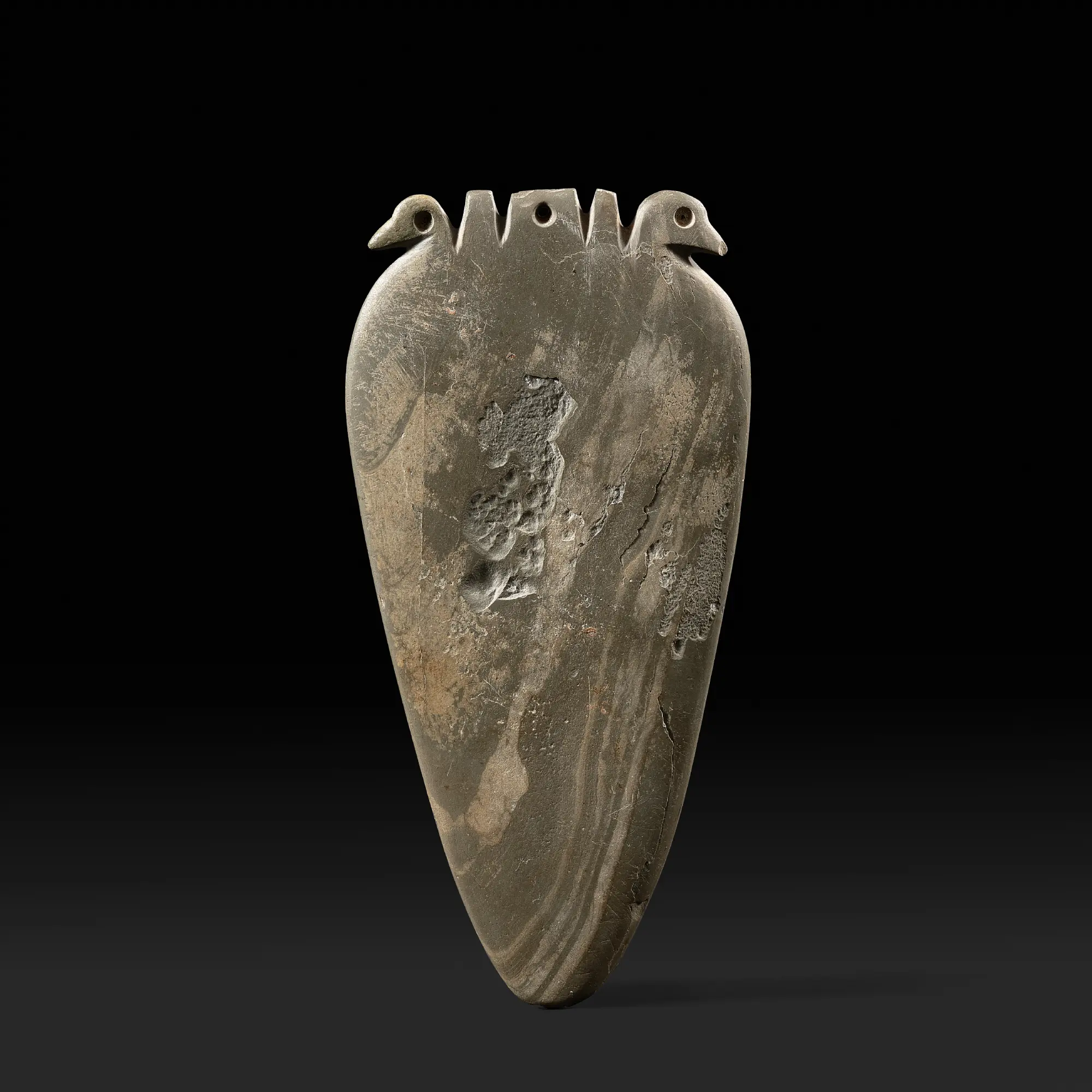
The cosmetic palette is oval in shape, tapering to a point at the bottom and surmounted by a pair of outward-facing bird heads, possibly those of ducks. The eyes of both birds are marked with a drilled hole, which would originally have held inlays of bone or ostrich eggshell. The spiked decoration between the two heads may represent a nest. A small perforation between the heads would have allowed the palette to be suspended. Slate palettes of various shapes were among the most common grave goods of the Predynastic Period. Although apparently intended primarily for grinding cosmetic pigments, these objects held significance beyond their practical function, serving ceremonial and possibly symbolic purposes. Eye cosmetics themselves may have offered some protection against the intense sunlight and possessed disinfectant properties. At the height of their popularity, cosmetic palettes frequently took the form of animals. The creatures depicted, often fish or birds during Nagada II, were likely invested with symbolic meaning, perhaps intended to confer upon their owners the animals’ strength, vitality, or other desirable qualities.