Previous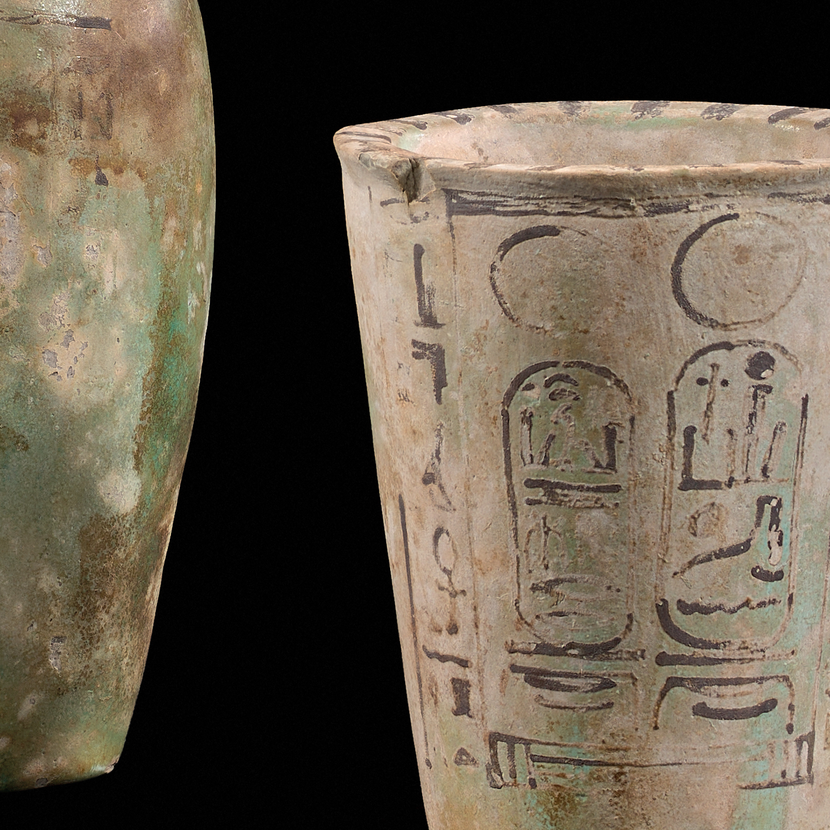
Foundation Deposit
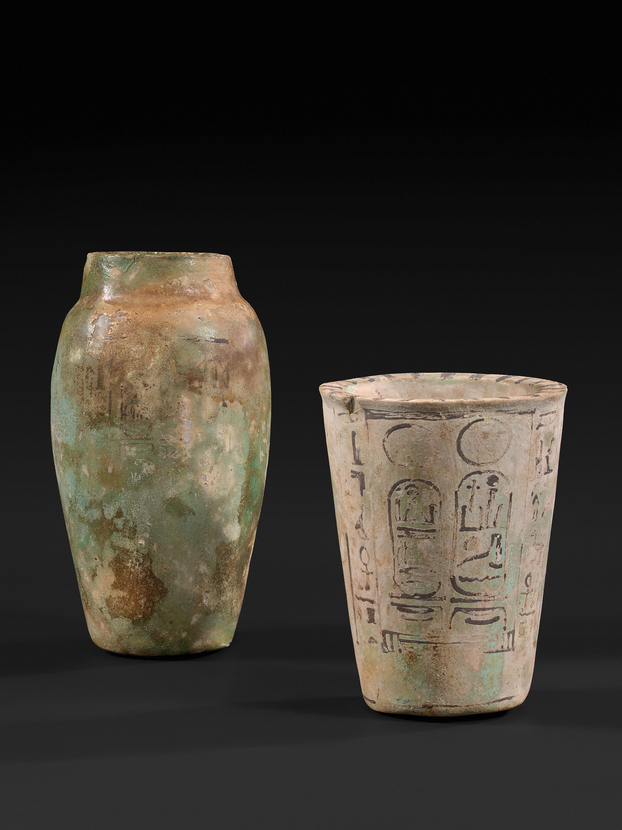
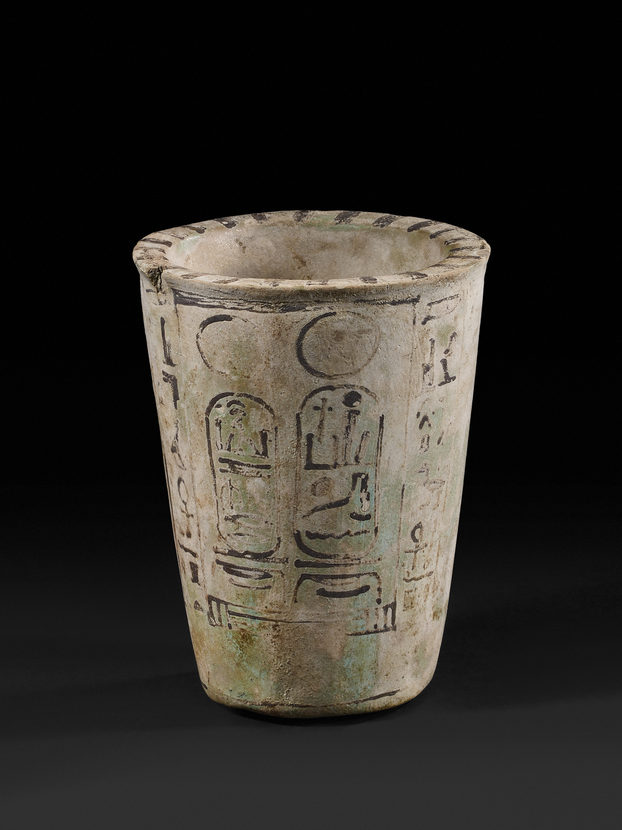
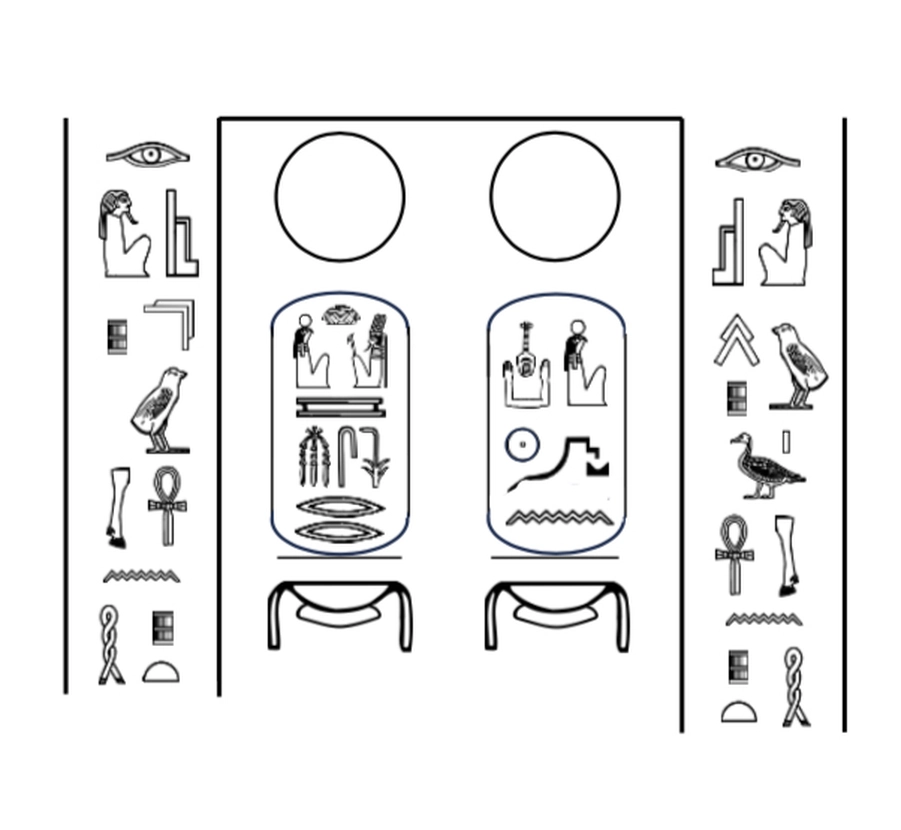
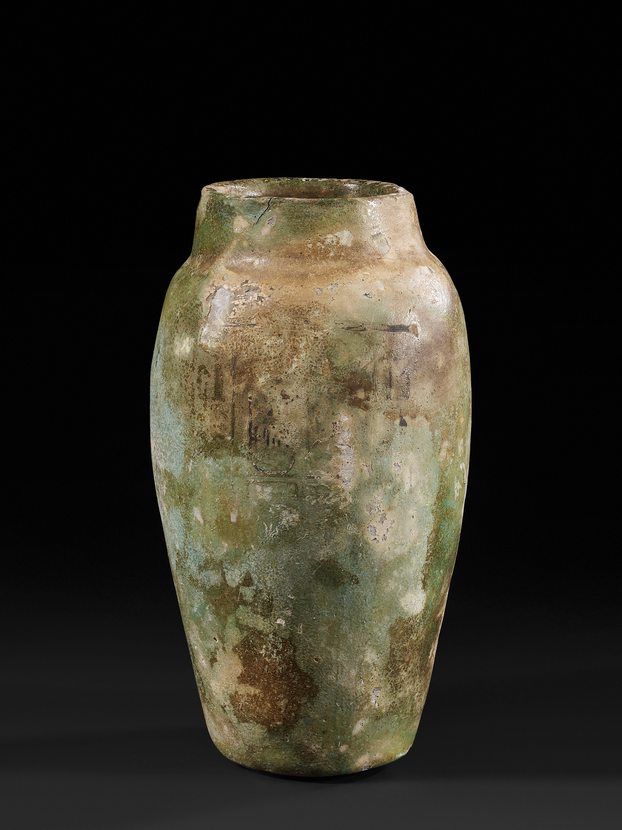
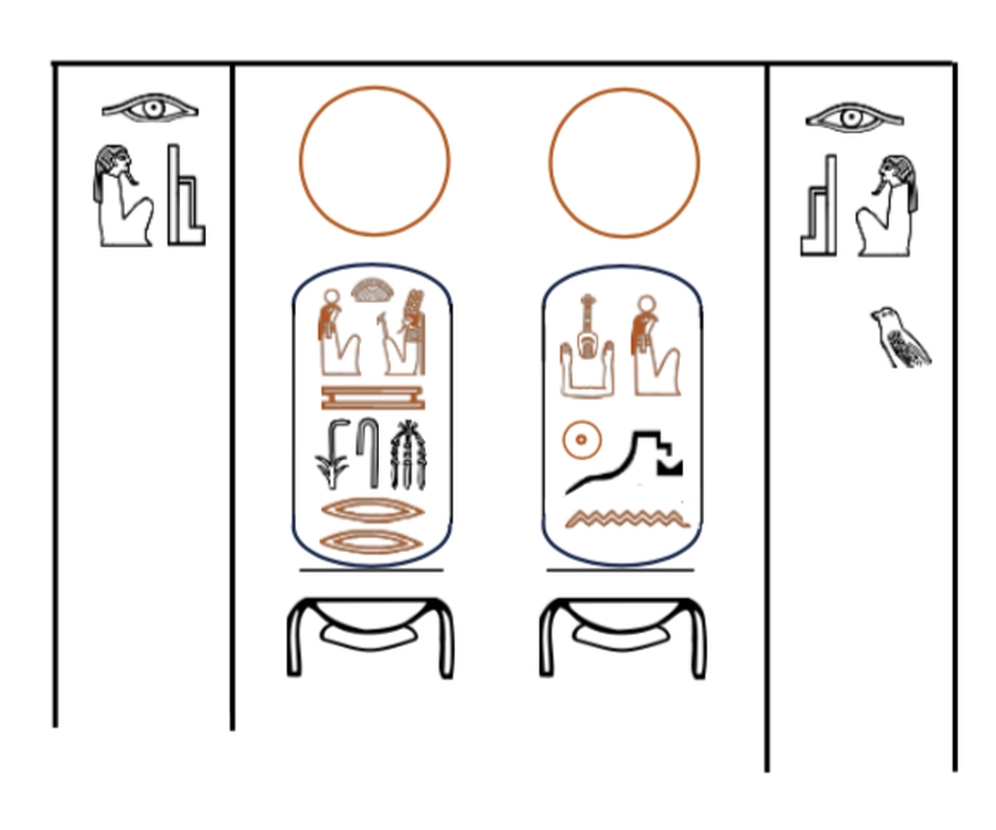
Large cylindrical cup and a large elongated vase with black inscription on the front. The two cartouches of Rameses IX are flanked by a column of inscription either side evoking the Osiris Apis, the renewed life of Ptah.
Egypt, Serapeum
New Kingdom , XX Dynasty, 1126-1108 BC (reign of Ramses IX)
Blue-green faience with black inscription
Height 24 cm ( 9 1⁄2 in )
Diameter 8.5 cm ( 3 3⁄8 in )
Private collection William Goodfellow, explorer & collector travelling extensively in Africa circa 1885-95. He was the great-uncle of the former owner’s mother, a Scottish gentleman born in 1943
B. Porter & R. Moss: Topological Bibliography of Ancient Egyptian Hieroglyphic Texts, Reliefs and Paintings, III. Memphis, Part 2 Saqqara to Dashur, Griffith Institute Ashmolian Museum, Oxford 1981
A. Mariette: Serapeum de Memphis, Gide, Paris 1866
P. Pierret: Catalogue de la Salle Historique de la Galerie Égyptienne, Musée du Louvre, Charles de Mourgues Frères, Paris 1873
Musée du Louvre N 442 B
 Share
Share  Print
Print  Call Us
  Enquire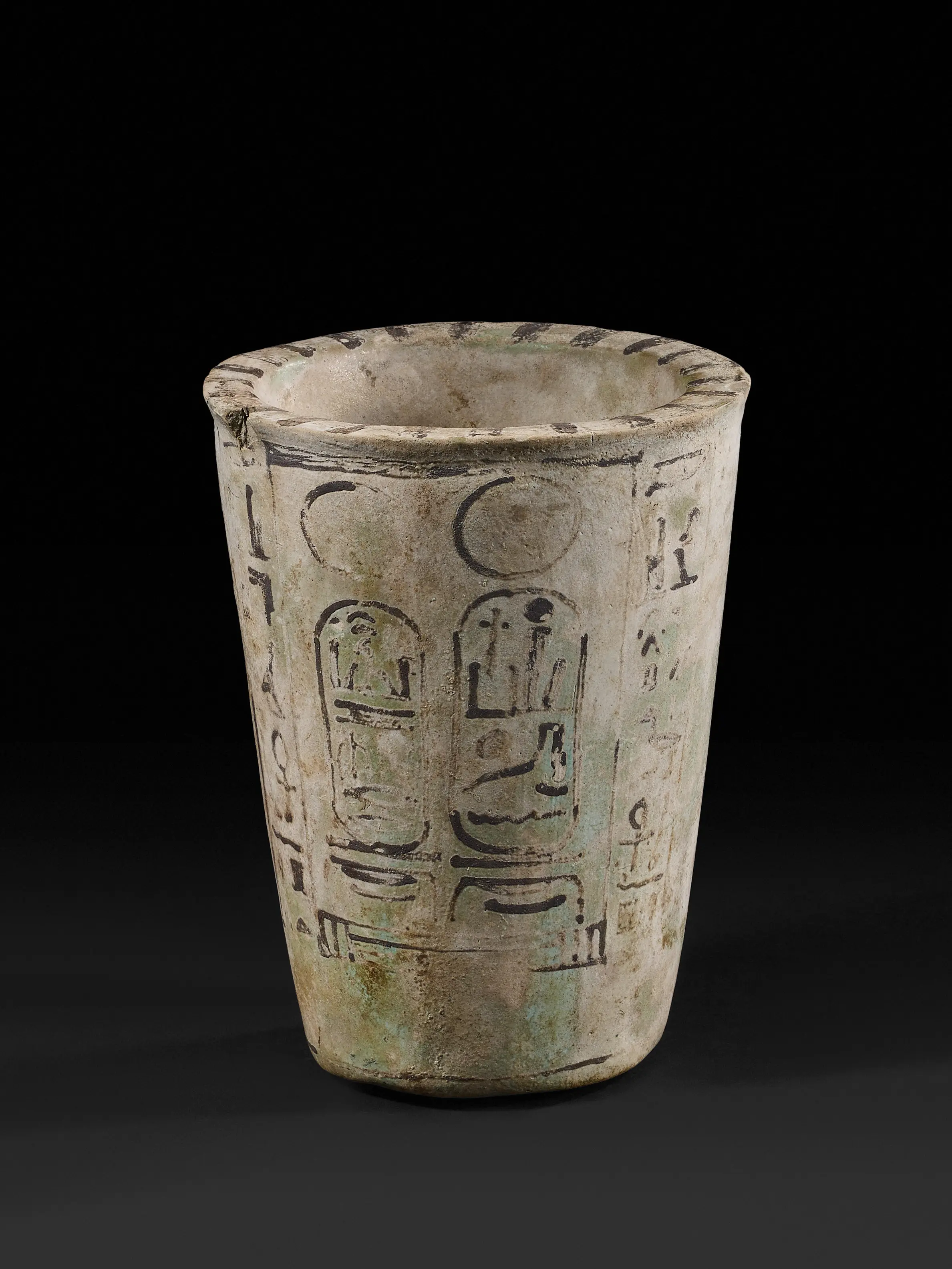
Large cylindrical cup and a large elongated vase with black inscription on the front. The two cartouches of Rameses IX are flanked by a column of inscription either side evoking the Osiris Apis, the renewed life of Ptah.
The most ancient burials at the Serapeum, found in isolated tombs, date back to the reign of Amenhotep II of the XVIIIth Dynasty. During the reign of Ramses II, his son Khaemwaset, administrator of the Serapeum, ordered a tunnel with side chambers, the "Lesser Vaults", to be excavated for the burial of the Apis bulls.
In 1850 Auguste Mariette discovered the Serapeum of Saqqara and excavated it the following years. He found two undisturbed Apis burials, as well as thousands of objects related to centuries of cult activity.
An identical cylindrical cup N 442 B preserved at the Louvre in Paris was found in the Lesser Vaults, in a niche of the chamber of Ramses VIII, Apis X, inside another vase (n° 3693).