 Previous
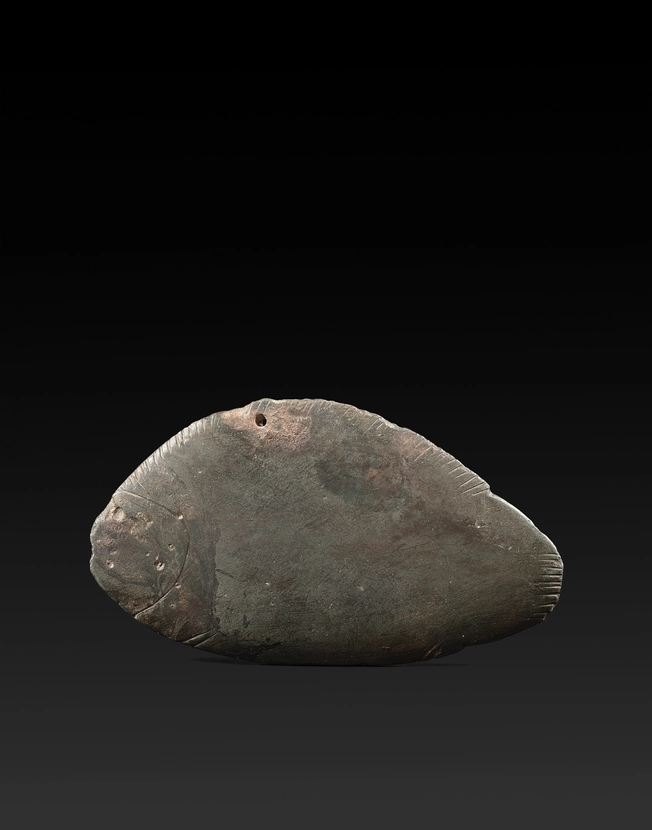
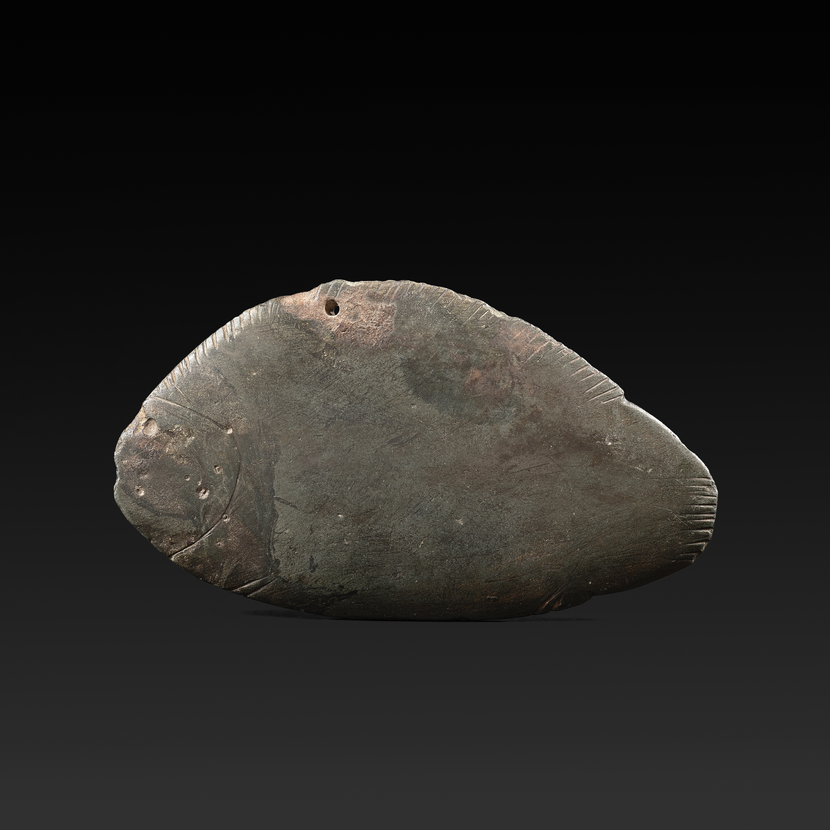
Cosmetic Palette in form of a fish
This palette appears to represent a bulti, or tilapia fish, with a large, oval-shaped body and fins and head rendered in simple, incised lines.
Egypt
Nagada II , 3500-3200 BC
Grauwacke
Height 10 cm ( 3 7⁄8 in )
Length 18 cm ( 7 1⁄8 in )
Private collection Dr. J. Hansen Saint Lizier, France, acquired in 2006 from Galerie Haering, Freiburg im Breisgau, Germany; thence by descent
A. Wiese & M. Page-Gasser : Ägypten, Augenblicke der Ewigkeit, Philipp von Zabern, Mainz 1991 W.M. Finders Petrie : Corpus of Prehistoric Posttery and Palettes, British School of Archeologie in Egypt, 1917
Petrie Museum, UC15826
 Share
 Print
 Call Us
 Enquire
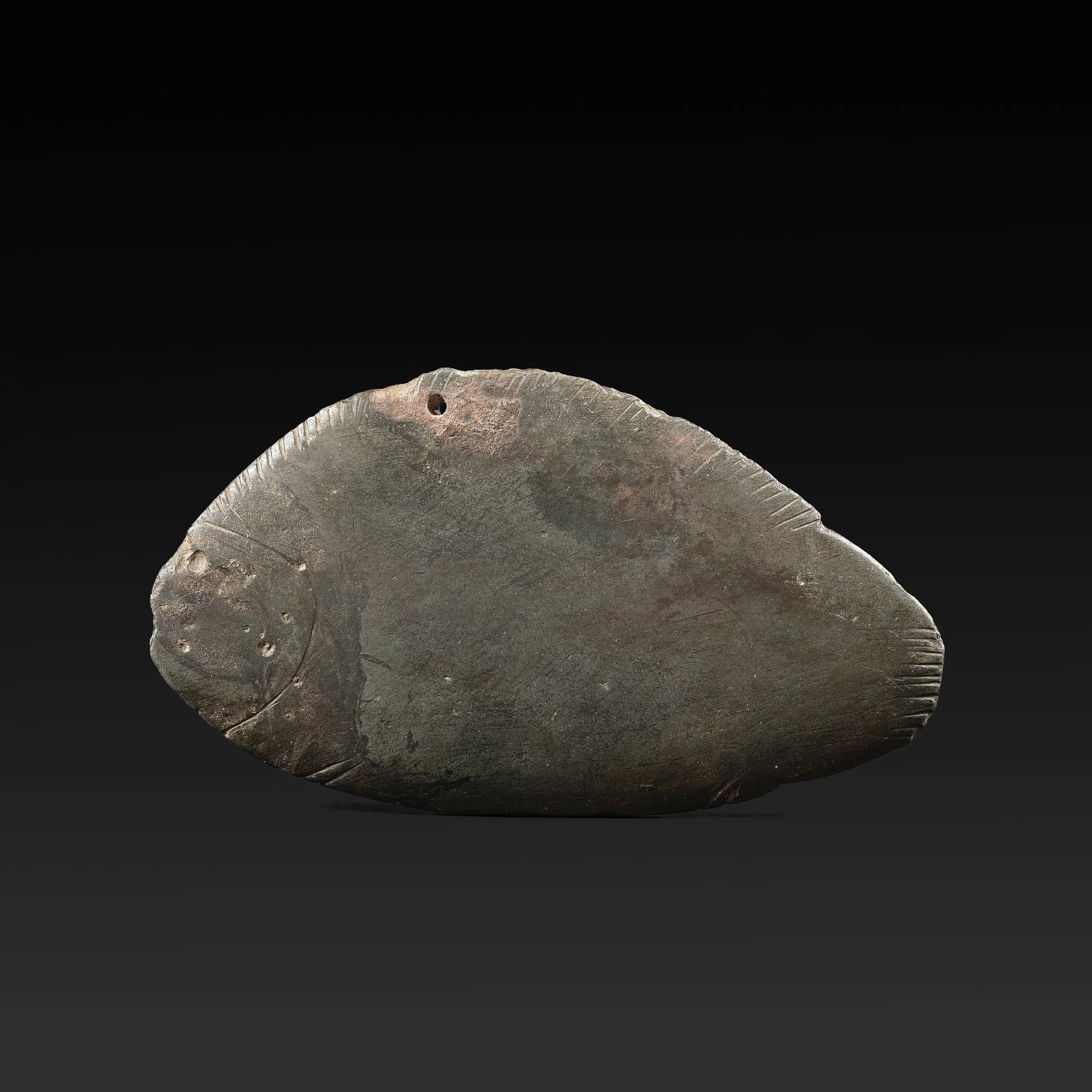
This palette appears to represent a bulti, or tilapia fish, with a large, oval-shaped body and fins and head rendered in simple, incised lines. The bulti is mentioned in Egyptian medical papyri as an ingredient in the preparation of a salve. Beyond their decorative function, eye cosmetics may have helped protect the eyes from the intense sunlight and acted as a natural disinfectant. Another possible reason for the use of fish motifs on cosmetic containers and palettes lies in the association of the bulti with the word wadj, meaning “green” or “youthful.” The term wadj was also used to refer to green eye paint, suggesting a possible symbolic connection between the fish, the colour green, and rejuvenation. Slate palettes in a variety of shapes were among the most common grave goods of the Predynastic Period. Although these objects appear to have been designed primarily for grinding cosmetic pigments, their significance extended beyond their practical function to encompass ceremonial and symbolic dimensions. At the height of their popularity, cosmetic palettes frequently took the form of animals. The creatures depicted, often fish or birds, were likely invested with symbolic meaning, perhaps intended to confer upon their owners the animals’ strength, vitality, or other desirable qualities.


